


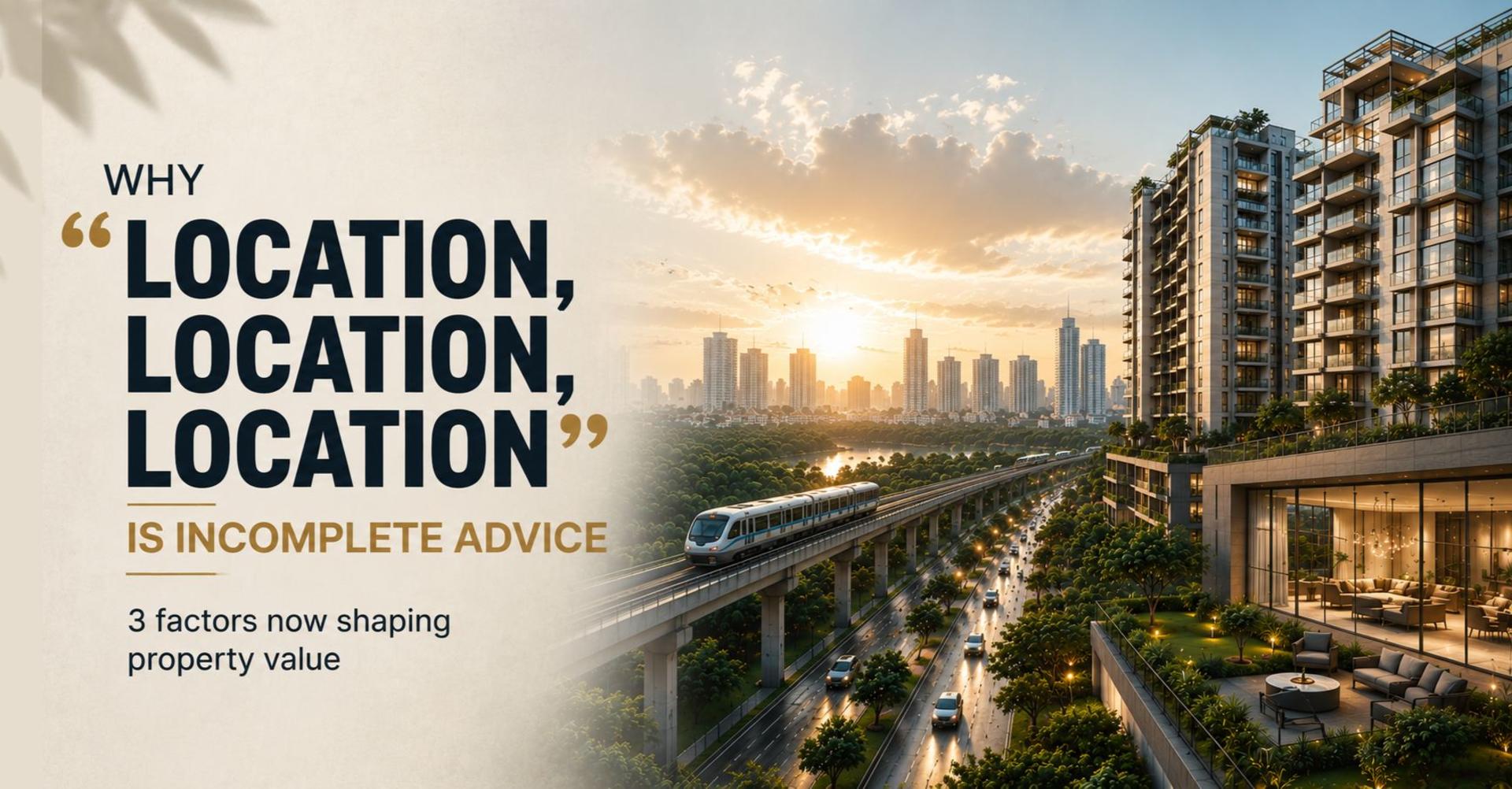
The Old Rule Isn’t Wrong - Just Incomplete
Every Indian homebuyer has heard it from brokers, family, and builders alike: “Location, location, location.” Buy near a good school, a metro corridor, or an IT hub, and the property will take care of itself.
That advice still holds weight. But India’s real estate market has changed. Bengaluru has seen flooding in neighbourhoods once considered premium. Metro expansions and new roads are reshaping commute patterns. At the same time, buyers are paying more attention to construction quality, energy efficiency and long-term maintenance costs.
A good address is still valuable. But it is no longer enough.
Today, three additional factors can significantly influence whether a property holds its value: climate and monsoon resilience, infrastructure momentum, and the quality and efficiency of the building itself.
What “Good Location” Misses Today
1. Climate and Monsoon Risk
A property can be in a desirable locality and still carry significant environmental risk.
Parts of Bengaluru, Mumbai, Chennai and Gurugram have experienced recurring waterlogging and flooding during intense monsoons. Two properties in the same broader neighbourhood can face very different risks depending on elevation, drainage, stormwater networks and their exact position within the micro-market.
For buyers, this means looking beyond the locality name. Check the property's history during previous monsoons, the surrounding drainage infrastructure and whether access roads remain usable during heavy rainfall.
A premium location cannot compensate for a property that repeatedly becomes difficult to access or maintain.
2. Infrastructure Momentum
Property value is influenced not only by what surrounds it today, but also by what is likely to arrive tomorrow.
Metro expansions, major roads, expressways, business parks and new civic infrastructure can transform the attractiveness of an area. Bengaluru’s expanding metro network, for example, has changed how buyers evaluate several previously peripheral corridors.
But planned infrastructure should not automatically be treated as guaranteed appreciation. Projects can face delays, changes in alignment or execution issues.
Smart buyers should therefore verify infrastructure announcements through official authorities rather than relying entirely on a broker’s “upcoming metro” pitch.
The important question is not simply “What is nearby?” but “What is changing around this property, and how credible is that change?”
3. Building Quality and Efficiency
The third factor is often overlooked because buyers focus heavily on the locality and project amenities.
Yet the building itself determines much of the cost and comfort of ownership.
Ventilation, natural light, orientation, construction quality, insulation, plumbing, power backup and maintenance requirements can make a significant difference over a 10- or 15-year holding period.
A larger apartment in a supposedly better location may not necessarily be the better asset if it has poor ventilation, excessive heat gain, expensive maintenance or recurring building issues.
The real cost of a property is therefore more than its purchase price.
What This Means for Homebuyers
The due-diligence checklist needs to go beyond location and price.
Check historical flooding and waterlogging at the specific street or project, not just the broader locality. Verify the project's RERA registration and examine the developer's delivery and construction track record.
Investigate approved and proposed infrastructure through official metro, municipal and government sources. And during a site visit, pay attention to things that brochures rarely highlight: ventilation, natural light, parking access, maintenance costs, water supply and power backup.
These details may seem secondary while buying, but they influence everyday living and long-term value.
What This Means for Investors
For investors, these factors eventually show up in returns.
Flood-prone micro-markets can face weaker rental demand and resale resistance. Infrastructure improvements can increase demand before a project is fully completed, but only when execution is credible. And poor construction quality can quietly reduce rental yields through higher maintenance and repair costs.
This also changes how diversification should be viewed. It is not only about owning properties across different cities. Investors should also consider different infrastructure corridors, climate exposures, property types and developer track records.
The Real Formula for Property Value
Location still matters. It remains the starting point - but it shouldn't be the entire decision.
Climate resilience affects how well the property can withstand changing weather conditions. Infrastructure momentum determines whether the surrounding area is gaining connectivity and economic activity. Building quality determines how much it costs to live in, maintain and eventually sell the property.
The strongest property decisions come from evaluating all four together: location, resilience, infrastructure and building performance.
Because a property is not simply an address on a map. It is an asset that has to perform for years after the brochure has been forgotten.
Make the Decision Beyond the Pin on the Map
Before buying your next property, don't stop at the location. Ask what risks surround it, what is changing around it, and how well the building itself is likely to perform over time.
The best property isn't always in the best-known location. Sometimes, it's the one whose risks, costs and future potential you've actually taken the time to understand.
Tags
RealHubb Team
Real Estate Expert · RealHubb Ventures
RealHubb Team is a seasoned real estate advisor at RealHubb, dedicated to helping families find their dream homes in Bangalore, Hyderabad, and Chennai.